54V AI Power Shelves
Reducing Heat at the Magnetic Layer of AI Power
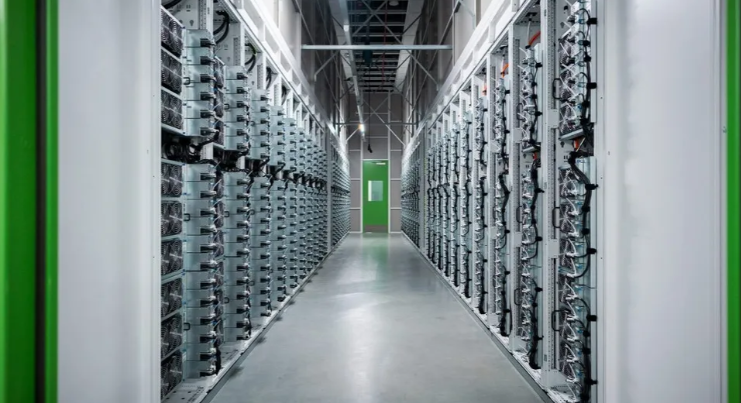
AI racks are turning power delivery into the main event. We’re no longer talking about “efficient enough” server PSUs—we’re talking about rack-scale power shelves feeding 54V busbars, where the real-world limits are copper, heat, EMI, and stability under brutal transient loads. NVIDIA themselves call out that today’s AI racks rely on 54 VDC distribution, and as racks push into the hundreds of kilowatts, that approach starts hitting physical constraints.
At the same time, the industry is mid-shift toward 48V-to-54V rack power standards (OCP/Open Rack ecosystems), because it’s the most practical way to distribute serious power inside a rack today.
Here’s the hard truth: every watt you lose in power conversion becomes heat. And heat doesn’t just cost you once—it costs you again in cooling, airflow, ducting, facility overhead, and ultimately in lost density or forced capex upgrades.
That’s why FluxWorx is focused on one mission-critical beachhead:
A DFS-enhanced 400V → 54V isolated DC-DC module for AI rack power shelves
Built around our patent-pending proprietary magnetic transfer control architecture, DFS is designed to reduce the conversion pain that dominates AI power shelves: switching losses, thermal hotspots, EMI mitigation burden, and transient instability—without asking you to rebuild your entire power architecture from scratch.
Why this matters: PUE makes inefficiency insanely expensive
Data centers obsess over PUE (Power Usage Effectiveness) because it quantifies the overhead you pay beyond IT load. NREL notes that efficient facilities can be around 1.2 or less, while broader averages are higher.
The takeaway is simple: when you reduce IT power losses (conversion waste), you don’t just save watts at the PSU—you also reduce the facility work required to remove that heat. That’s why “small” efficiency improvements at the shelf level can create outsized TCO impact at fleet scale.
And yes—cooling savings are real money. If you reduce heat generation meaningfully, you can often relax fan curves, airflow demand, and cooling plant load. In the right operating envelope, our goal is to demonstrate up to ~30% reduction in cooling energy associated with the avoided heat (site-dependent, verified by A/B evaluation, not hand-waved). Think of it as: less heat created → less heat moved → less energy spent just to stay alive.
What DFS changes in a 54V AI shelf (safe description)
A typical AI shelf is: PFC/AFE → ~400V bus → isolated DC-DC → 54V bus → hot-swap/ORing/current share → rack busbars.
DFS integrates into the isolated DC-DC stage as a controllable magnetic transfer element. That gives the converter an additional “knob” to regulate power transfer and manage stress without forcing the semiconductor stage into increasingly aggressive switching extremes.
Practical outcomes we target
- Lower heat at the source
- Reduced thermal rise in the power stage, rectification, and magnetics
Better transient behavior under AI-class load steps
- Less droop, faster recovery, reduced overshoot/hunting.
Reduced EMI pressure
- Fewer “heroics” required in filtering and mitigation (validated by engineering pre-scan snapshots).
More robustness headroom
- Better tolerance of hot-swap events, bus disturbances, and stress conditions that cause nuisance trips.
For OEMs pushing higher rack power density, DFS is designed to add magnetic-layer control headroom where conventional switching, filtering, and thermal management are already under pressure.
The business case: what operators and OEMs actually get
For hyperscalers / operators
- Lower facility energy (IT savings + cooling knock-on)
- More usable rack density (thermal headroom becomes capacity)
- Higher uptime (fewer thermal/EMI corner-case failures)
- Slower capex curve (delay cooling and power infrastructure upgrades)
For PSU and shelf OEMs
- Higher power density without runaway temperatures
- Efficiency improvements where fleets spend time (often 20–50% load)
- A cleaner path to next-gen shelves as power levels climb past what “standard approaches” comfortably handle
How we prove it: a fast, OEM-friendly evaluation
We propose an NDA-backed 6–8 week A/B evaluation against a reference module.
Deliverables
Efficiency map (10/20/50/100% load)
- Thermal rise comparison (hotspots + magnetics + airflow parity)
- Transient response pack (AI-style load steps, droop/recovery/overshoot)
- EMI snapshot (engineering pre-scan style) + mitigation notes
- Reliability proxies (reduced hotspot temps, ripple stress indicators, event logs)
- Integration notes (control interface + limits + fail-safe behavior)
No hype — just efficiency maps, thermal data, transient response, EMI snapshots, and integration notes.
If you’re building 54V shelves for AI racks, you’re already in the fight
FluxWorx is building the tool that helps you win it—with less heat, less noise, less overbuilt copper, and more power delivered where it counts.
Download our White Paper HERE
Next step: Contact FluxWorx to discuss an evaluation module and test plan.